Absinthe Verte
Verte
The classic green pour: wormwood, anise, fennel, hyssop, and melissa with a jade louche and alpine bitterness.
Explore VerteNowhere's End
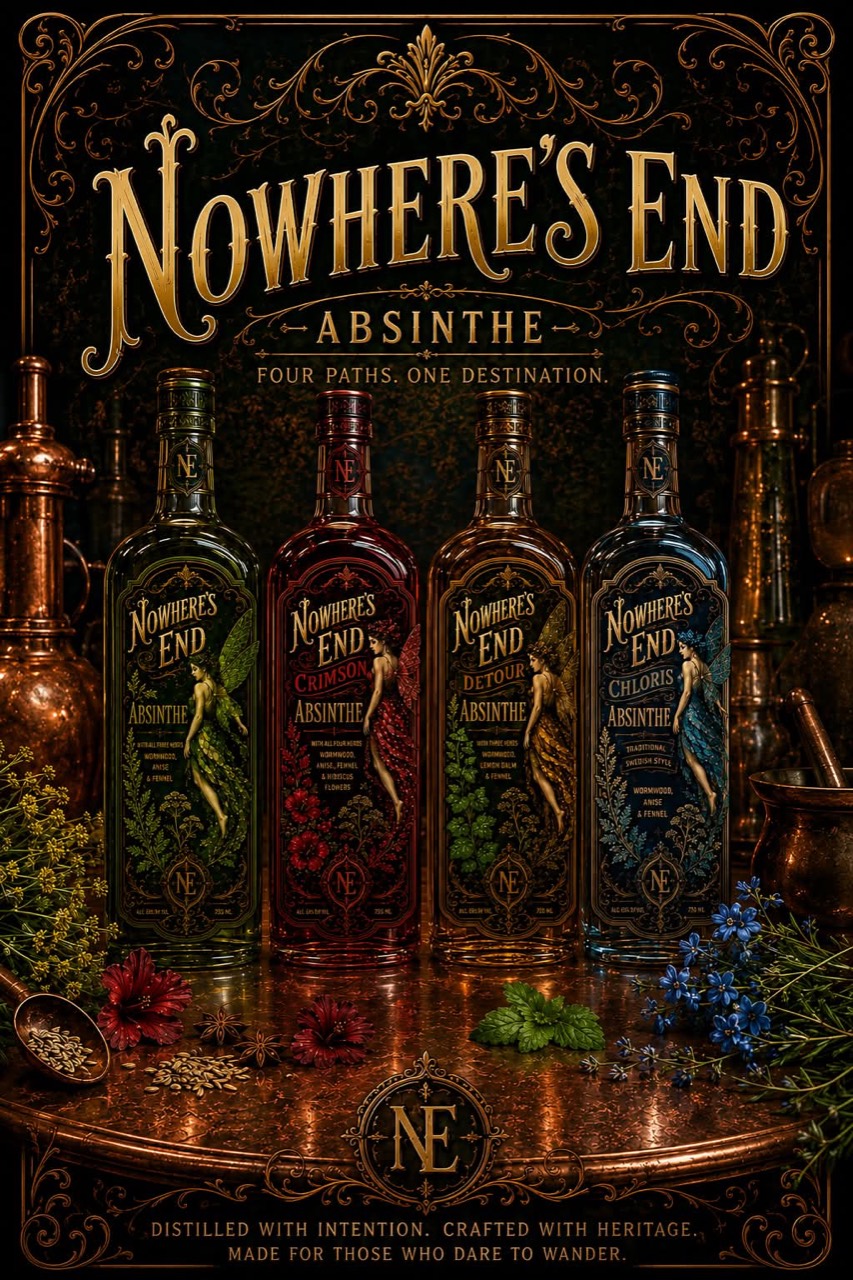
Four absinthes, four distinct rituals: Verte, Bleue, Crimson, and Detour. Enter through the bottles, the Green Hour, and the world that formed them.
Positioning
Each bottle has its own ritual, color, and botanical signature. The deeper plant and compound notes remain available, but the primary experience here should begin with the pour itself.
Absinthe Verte
The classic green pour: wormwood, anise, fennel, hyssop, and melissa with a jade louche and alpine bitterness.
Explore VerteAbsinthe Crimson
Hibiscus, rosehip, citrus, and spice bring ruby color and floral brightness to a dramatic table pour.
Explore CrimsonAbsinthe Detour
The off-ramp from heavy licorice: citrus, juniper, butterfly pea, and a blue-to-violet transformation in the glass.
Explore DetourAbsinthe Bleue
Clear in the bottle, alpine in character, and built for a slow louche with cool fennel and herb lift.
Explore BleueHistory
From Swiss stillrooms to Paris cafés, prohibition, myth, and revival: a sourced history page with timeline notes and illustrations.
Read the historyN/A Ritual
A zero-proof ritual built around bitterness, louche texture, alpine herbs, and the slow water bloom rather than alcohol.
Explore the N/A pageArt · Literature · Music
Paintings, books, cabaret, chanson, and listening paths that shape the Book of Potions’ cultural atmosphere.
Browse the artBotanical Notes
For readers who want the deeper Terpedia layer, the herb and compound libraries trace the line back to the plants and aromatic structures underneath it.
Browse the plant notesAbsinthe Garden
A practical growing assessment for the herbs, flowers, roots, spices, and fruits behind the Nowhere line.
Open the garden planBook of Potions
A fully illustrated coffee-table book joining absinthe history, mythology, botany, chemistry, pharmacology, and ritual.
Read the working outlineBiology & Perception
An explainer on anethole, glycyrrhizin, smell receptors, bitter receptors, and the biological entities behind licorice aversion.
Read the biology note