Ceremonial Object
The Green Dragon Blade
A deliberately mythic object for the Green Muse world: emerald glass, black dragonwork, and a blade that turns the absinthe ritual into heraldry rather than period reconstruction.
Use it as a symbolic prop for Verte and the Green Hour—ceremonial, theatrical, and unmistakably chosen rather than historically Swiss.

Core Myth
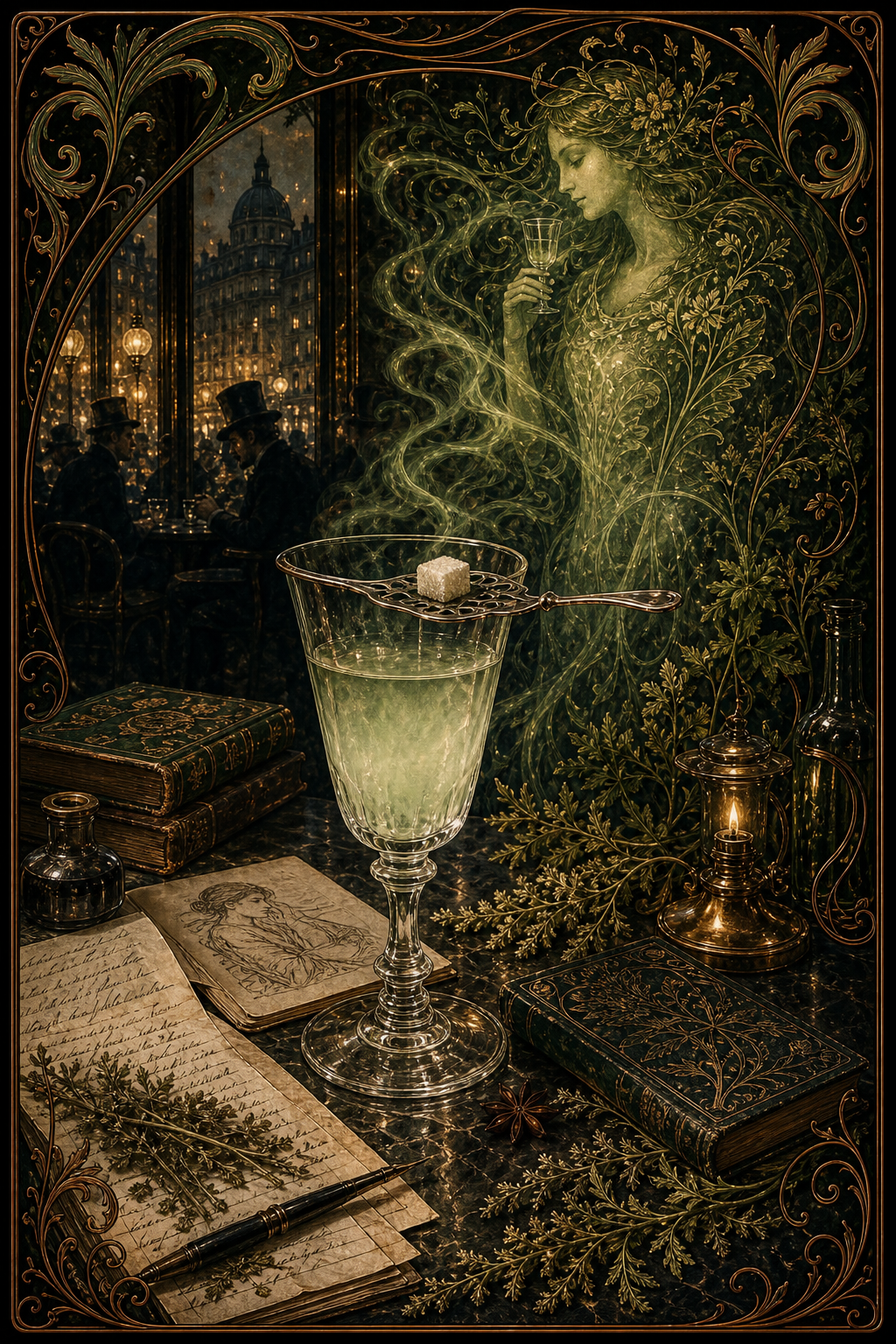
The Green Fairy as cultural engine
Absinthe became the emblem drink of late-19th-century Paris: not just alcohol, but atmosphere. In painting, fiction, memoir, and prohibition rhetoric, it carried a repeating cluster of meanings: bohemia, modern alienation, dangerous pleasure, nervous brilliance, and decline. The phrase la fée verte, the Green Fairy, gave the category a ready-made supernatural vocabulary that branding still borrows from today.[A1][A2]
Modern scholarship has pushed back hard on the older claim that absinthe was uniquely hallucinogenic beyond its alcohol content, but the myth itself mattered historically. It shaped paintings, anti- absinthe novels, café lore, and the moral panic that helped justify prohibition.[A3][A4]
Visual Canon
The paintings and objects that matter most
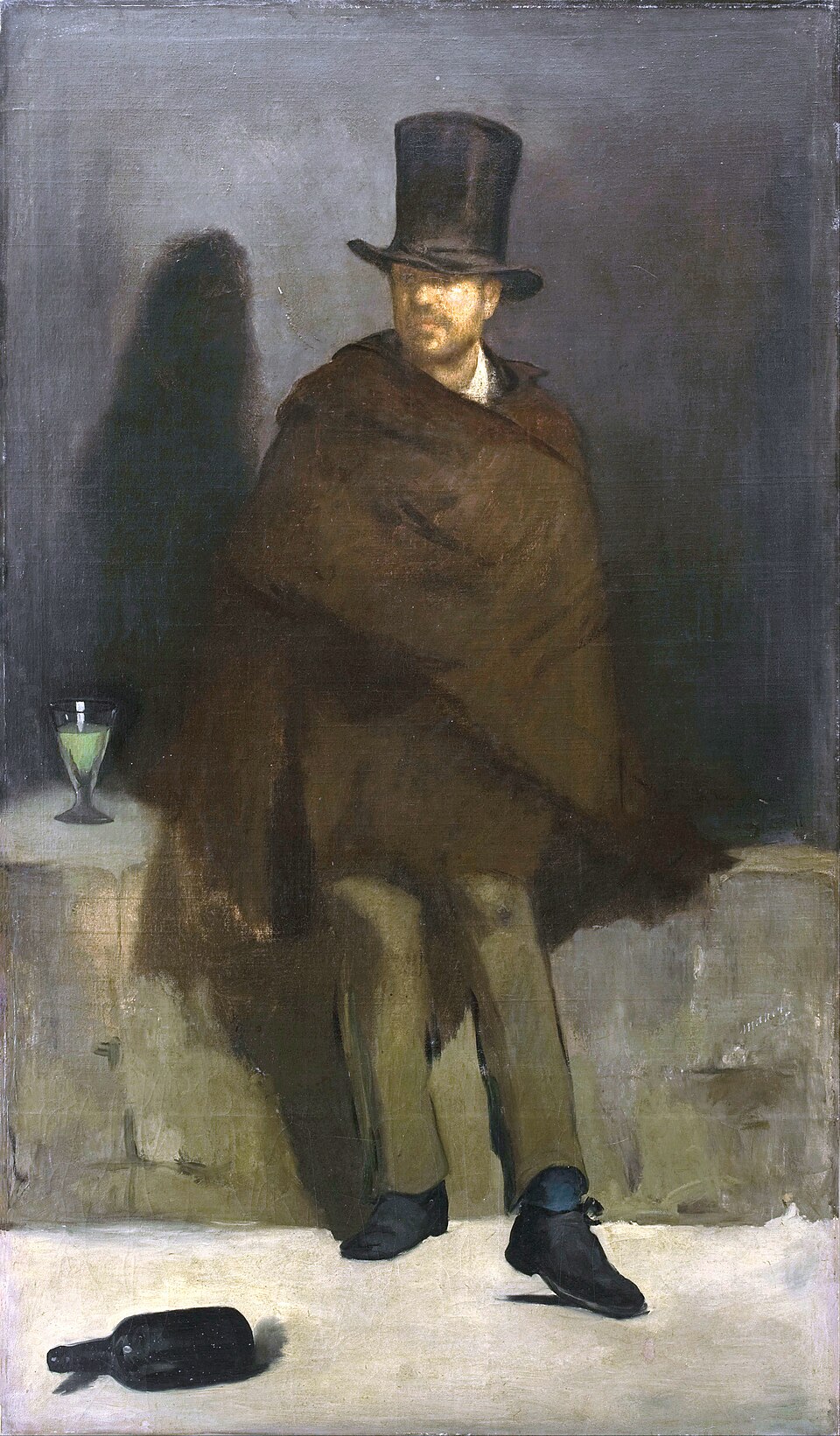
Édouard Manet, The Absinthe Drinker
One of the earliest modern absinthe archetypes: solitary, urban, marginal, already more social symbol than simple drink scene.
Steal: the lonely drinker, stripped café pathos, and urban marginality.
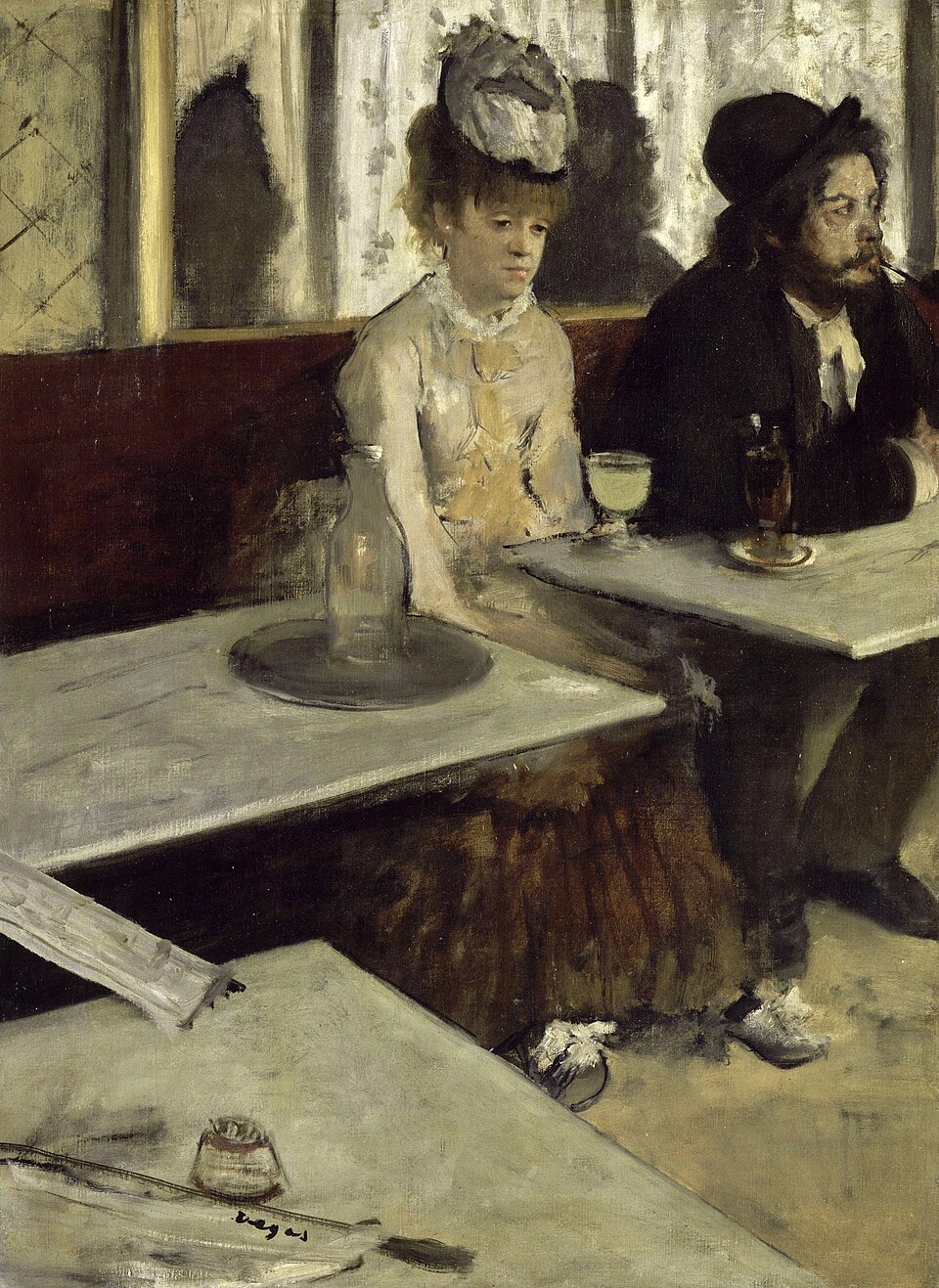
Edgar Degas, Dans un café / L’Absinthe
The defining absinthe image: silence, social dislocation, drained glamour, and the geometry of a café table turned into emotional structure.
Steal: diagonal tables, cropped framing, empty gaze, green glass as emotional accent.
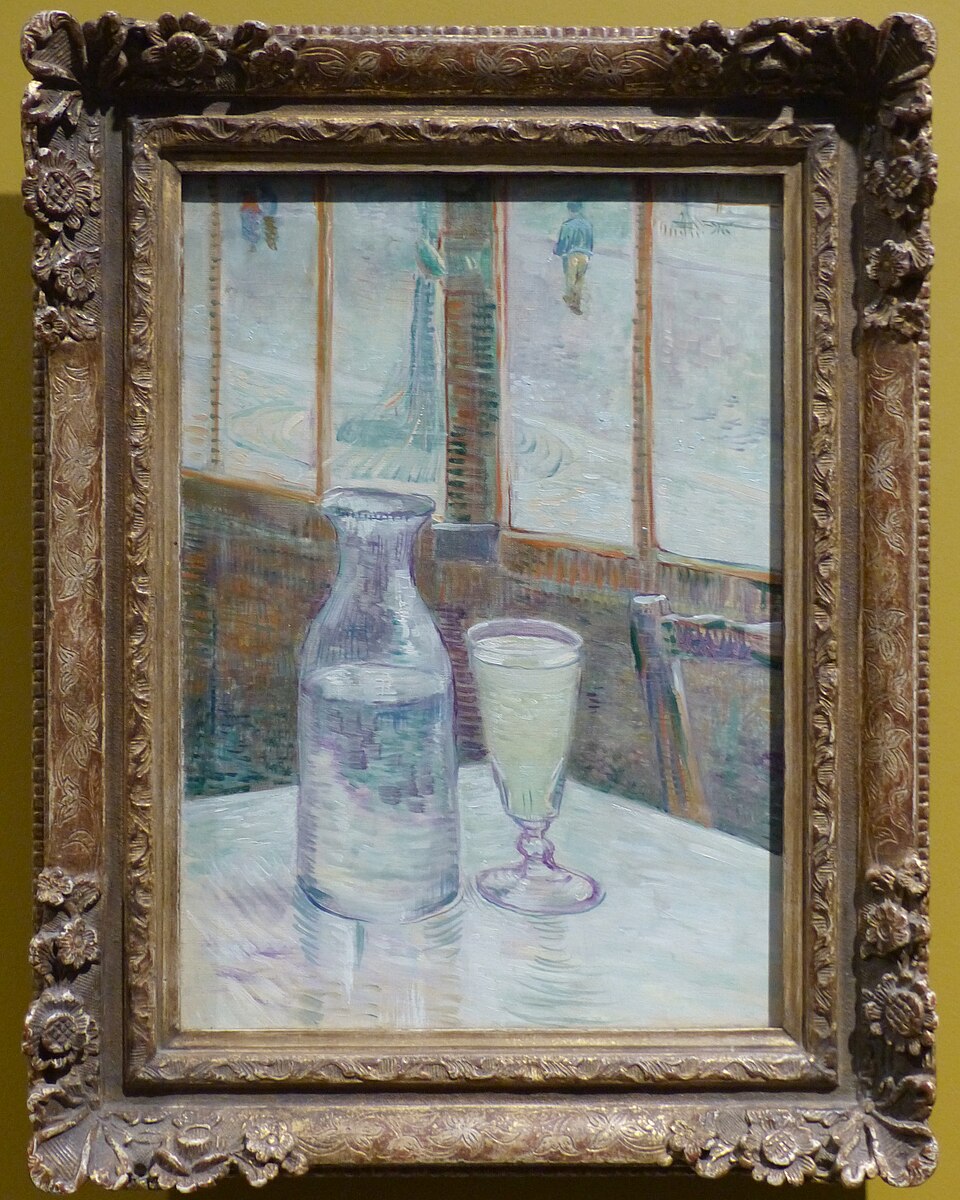
Vincent van Gogh, Café Table with Absinthe
A still-life of ritual rather than a portrait: glass, table, and atmosphere carry the charge. It is useful because the object becomes the whole story.
Steal: ritual still-life, opalescent glass, café tabletop minimalism.
Henri de Toulouse-Lautrec, Monsieur Boileau at the Café
Absinthe enters Montmartre nightlife: acid color, café grit, club atmosphere, and a figure inseparable from the social ecology of drinking.
Steal: gaslight greens, night-club mood, bohemian acidity.
Pablo Picasso, Glass of Absinthe
A major Cubist object lesson: the absinthe spoon becomes sculptural hardware, and ritual equipment crosses from use into art.
Steal: spoon-and-sugar iconography, object ritual, absinthe as artifact.
Other essential atmospheres
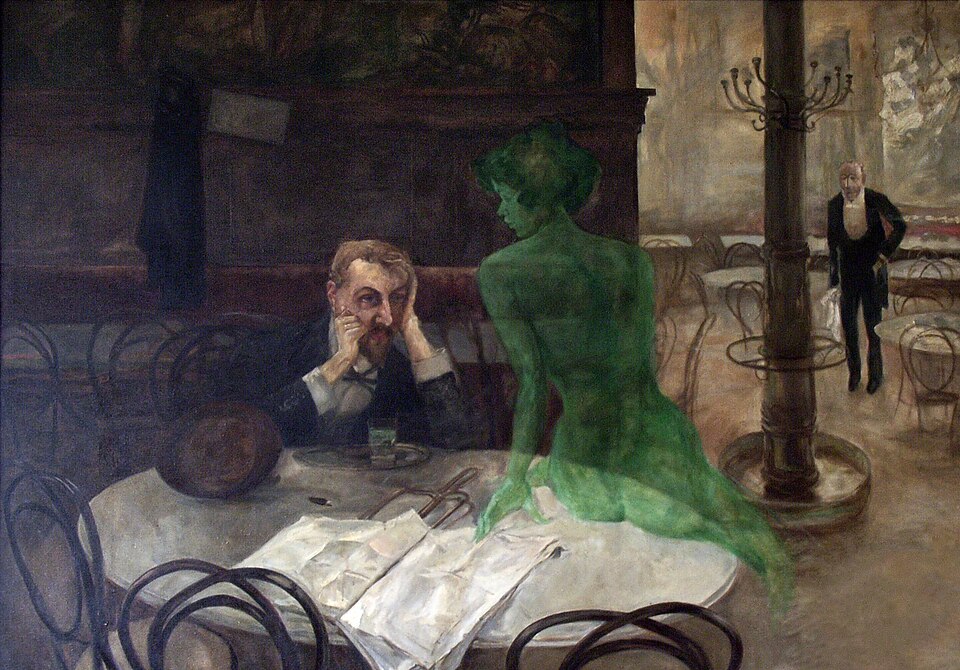
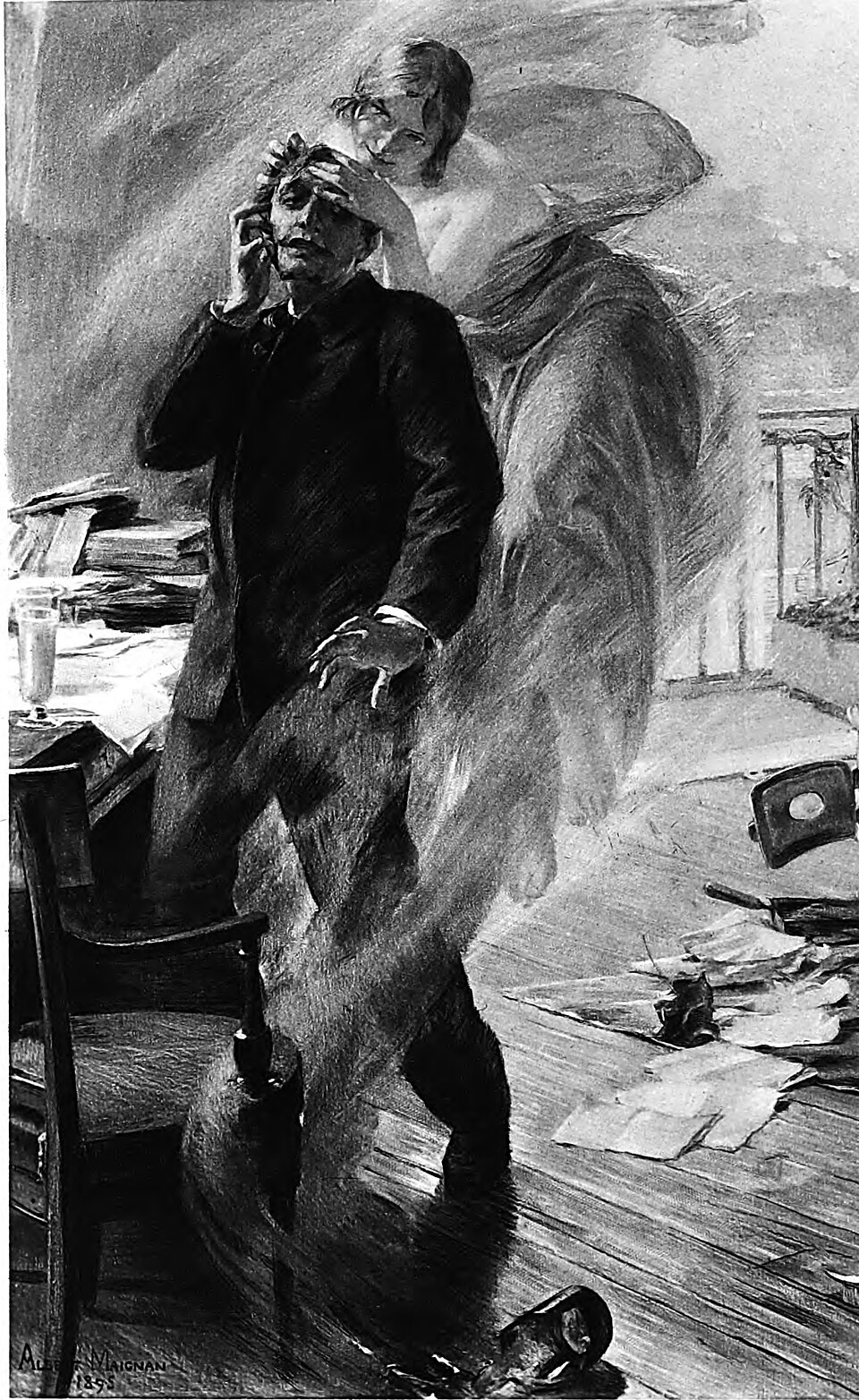
Viktor Oliva’s Green Fairy apparition, Albert Maignan’s supernatural muse, Munch’s pressure and unease, and Rops’s decadent inversion all deepen the symbolic range.
Steal: the muse, the apparition, the erotic-botanical threshold, the drink as visitation.
Image Board
The works to keep on the wall
Motifs
The visual language worth stealing
- Green glass and louche: transformation, chemistry, apparition.
- Slotted spoon and sugar cube: ritual tool, almost liturgical.
- Marble café table: modern loneliness and urban stillness.
- Acid yellow-green light: gaslight, nightlife, instability.
- Green woman or muse: inspiration and danger without literal pharmacology.
- Cropped frames and diagonals: Degas-style emotional architecture.
Literary Canon
The texts that shaped the myth
Émile Zola, L’Assommoir
Absinthe enters the language of social collapse, urban poverty, and industrial drink culture. It is foundational for the moral-panic side of the legend.
Marie Corelli, Wormwood: A Drama of Paris
The anti-absinthe gothic novel par excellence: seduction, mania, Paris, ruin, and green supernaturalism all in one package.
Guy de Maupassant, Two Friends
Absinthe appears not as madness but as ordinary café ritual just before fate turns dark. That contrast is part of the power.
James Joyce, Ulysses
“Green fairy” becomes memory-marker, exile signal, and shorthand for Parisian bohemian atmosphere rather than direct intoxication plot.
Oscar Wilde, attributed absinthe sayings
The famous “after the first glass…” line is culturally central but textually unstable. It is useful as lore only if labeled attributed rather than secure.
Aleister Crowley, Absinthe: The Green Goddess
Absinthe becomes occult-aesthetic ritual: initiation, decadence, green-hour mysticism, and ceremonial self-fashioning.
Quote Bank
Short fragments worth keeping in mind
Styles
The historical varieties, and where the house expressions fit
The category’s oldest internal split is between green verte absinthe and clear blanche or bleue absinthe. Verte was traditionally coloured after distillation and became the iconic Green Fairy image of the Paris café. Blanche or la bleue stayed clear in the bottle and is closely tied to Swiss production history, especially the clandestine period when visible colour was something producers could avoid.[A18][A19]
That split gives the line its strongest historical spine. Verte belongs to the classic green ritual. Bleue belongs to the Swiss-clear lineage. Crimson and Detour work best when framed honestly as modern house interpretations rooted in absinthe’s ritual logic rather than as supposedly recovered antique types.[A18][A19]