The visual thesis · 12 × 12 edition
Beauty is a form of evidence.
The image must seduce the eye before the caption teaches it how to look.
Beauty does not mean decorative vagueness. The botanical plate identifies the plant. The mechanism diagram earns its lines. The apparition is clearly an apparition. The archive image carries a source. The image may open the door, but the caption tells us which room we have entered. The square format gives each plate room to behave as both image and page.
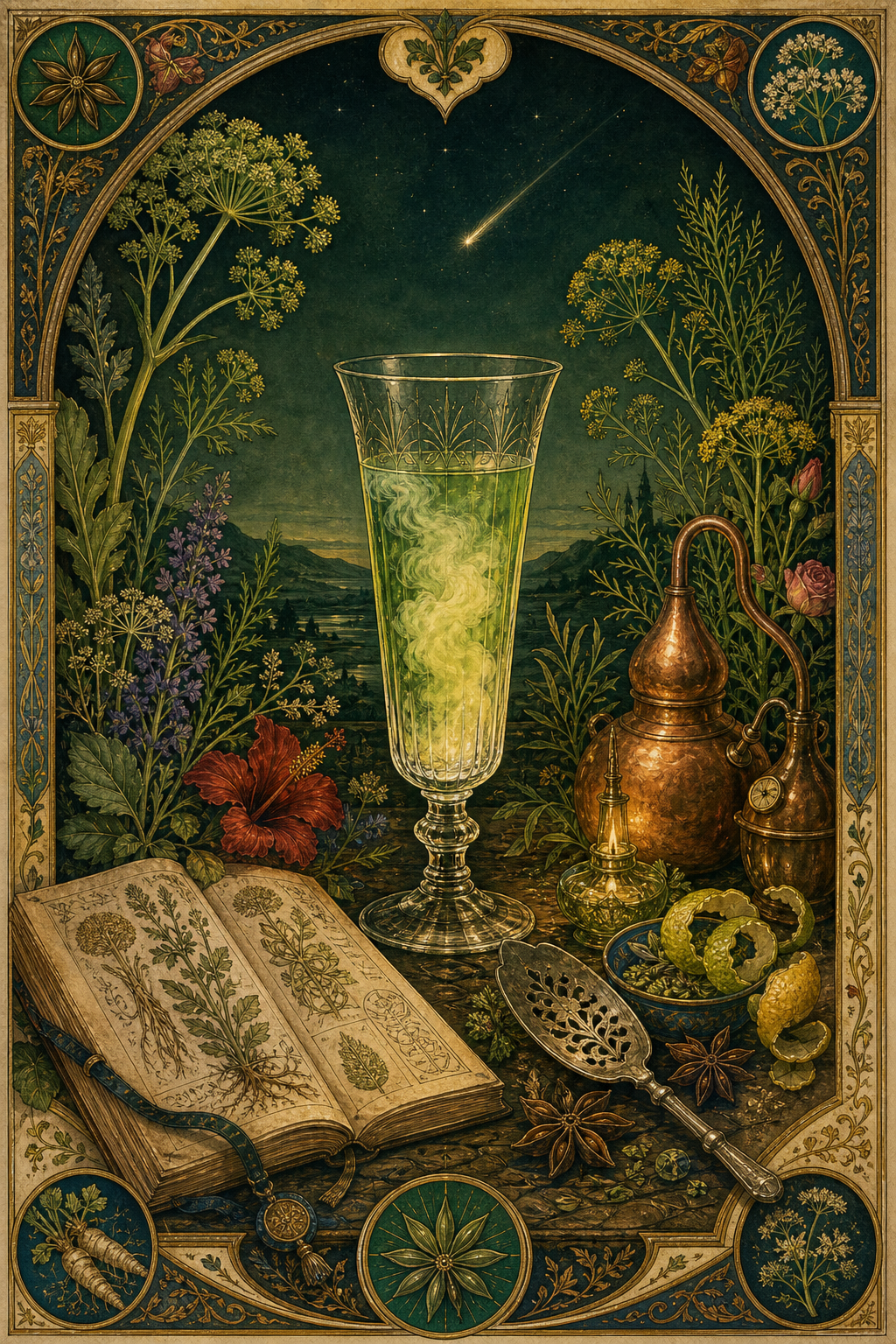
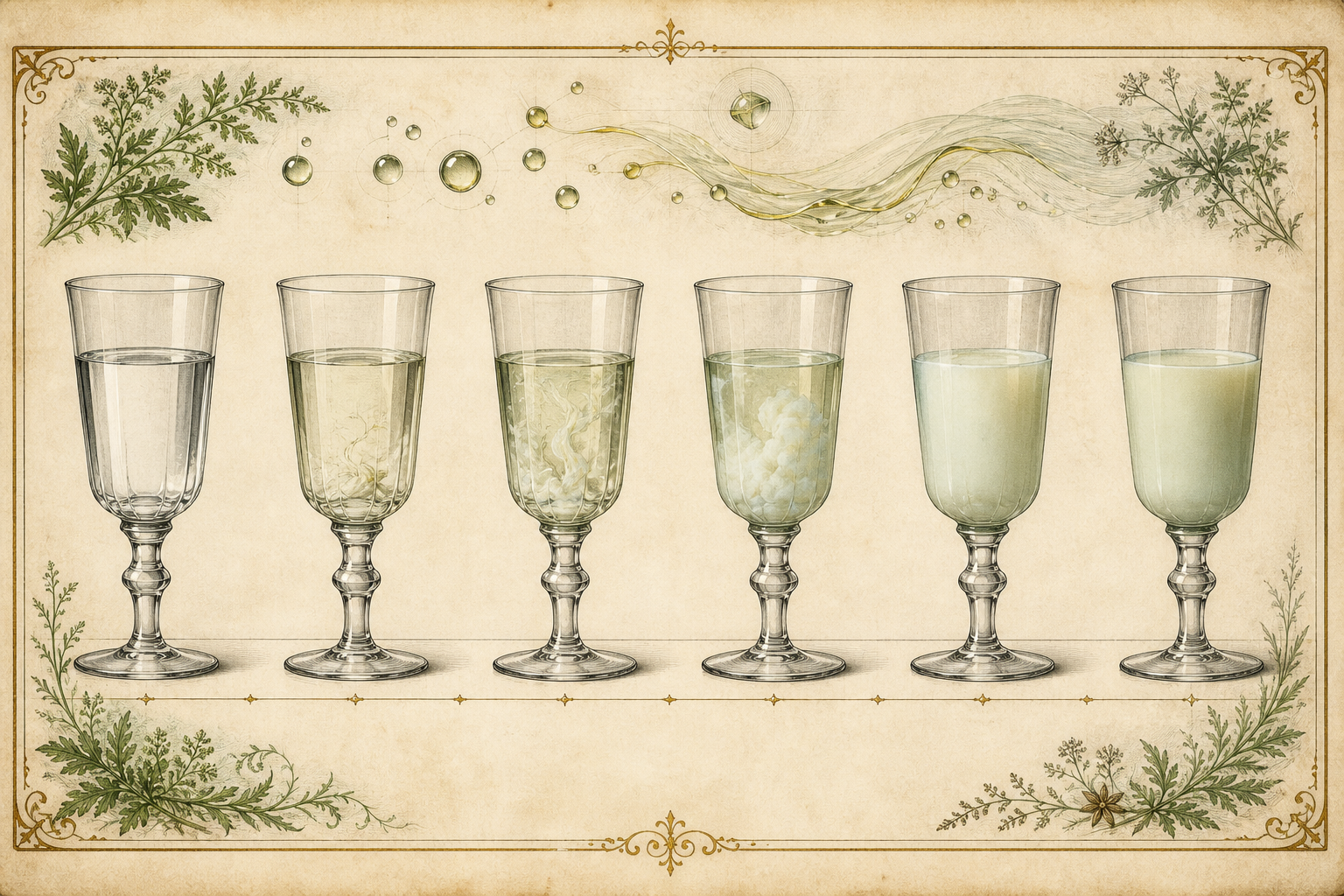
Now complete: the wormwood whole-plant plate, the Monument garden plate, and the louche mechanism plate have finished large-format assets, alt text, and caption boundaries in the manuscript.
Four plate families
One book, four visual instruments
The Botanical Plate
Pressed-looking specimen, whole plant, root, seed, flower, leaf, and labeled plant parts. Exact enough for identification; beautiful enough to feel talismanic.
The Mechanism Diagram
Glass, oil, water, molecule, receptor, still, color, and louche shown as clean explanatory systems over parchment or deep green.
The Historical Relic
Bottle, spoon, fountain, café, label, advertisement, manuscript, map, law, or archival fragment with provenance in the caption.
The Visionary Plate
Green Goddess, falling star, dragon, garden, sound, and ritual. Explicitly interpretive; never disguised as historical evidence.
Palette
The Nowhere spectrum
- Verdigris green: the living plant and the traditional verte.
- Deep forest: shadow, history, and the unlit laboratory.
- Parchment: source, memory, and the botanical page.
- Oxidized gold: ritual hardware, labels, and illumination.
- Cobalt: Bleue, distance, air, and clear spirits.
- Vermilion: Crimson, warning, blood, and floral heat.
- Louche yellow: transformation, instability, and the Detour turn.
Materials
What the pages should feel like
- Rag paper, deckled edges, and faint fiber
- Engraved linework and imperfect ink registration
- Translucent vellum overlays for molecules and louche stages
- Blackened copper, silver, glass, wood, and stone
- Marginal symbols that function as a visual index
- Occasional full-bleed color after long monochrome sequences
The sequence
Sixteen anchor plates
Open the gate
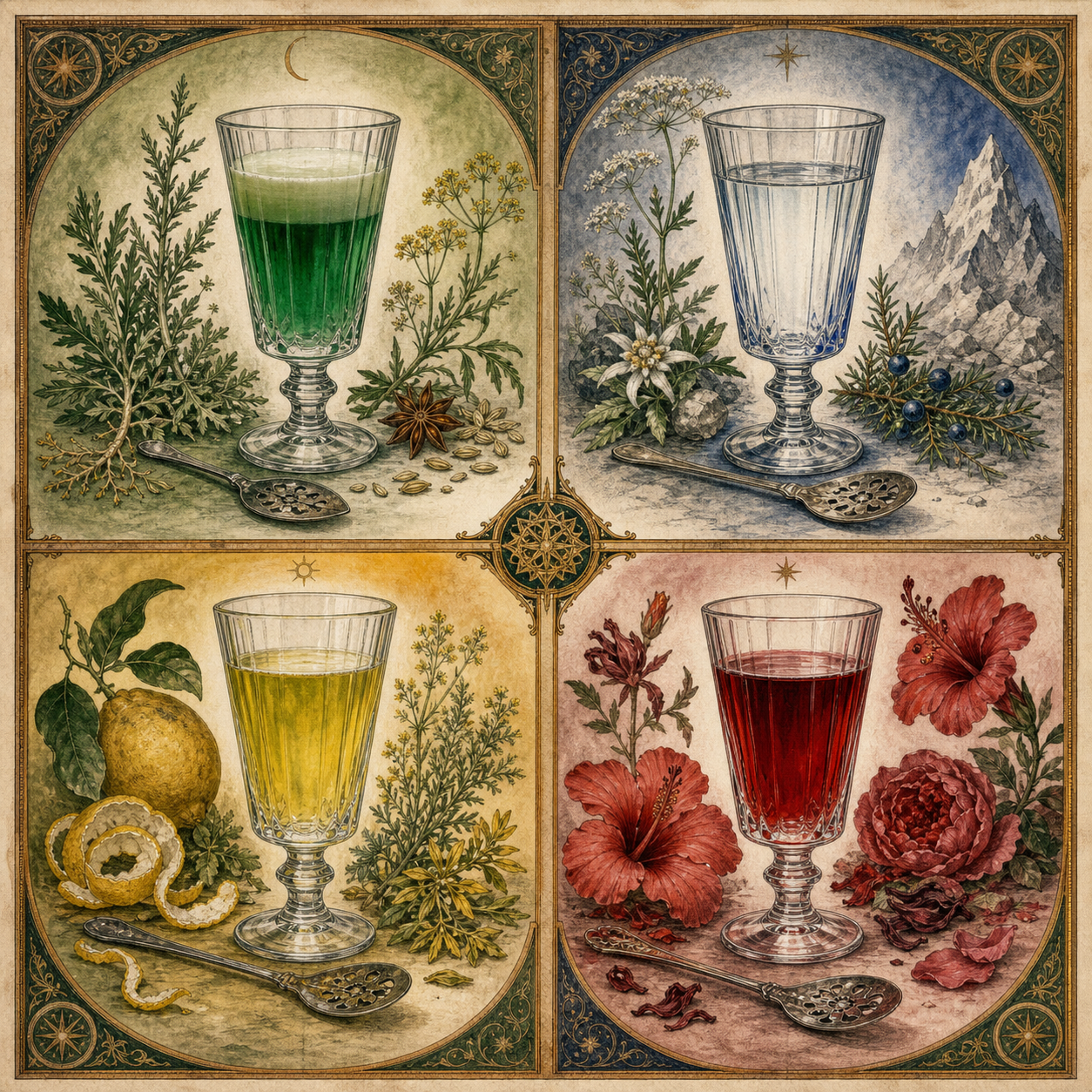
Frontispiece; four potion portraits; louche sequence; the glass, spoon, and water.
Recover the past
Wormwood specimen; Val-de-Travers map; café fountain; prohibition poster and legal document.
Enter the mechanism
Wormwood whole-plant plate; Monument garden; louche mechanism; color and evidence atlas.
Return changed
Cultural atmosphere; Revelation; laboratory bench; final shared table.
Plate register complete: all sixteen entries have a finished house or sourced asset, descriptive alt text, and a caption boundary in the print manifest.
Continuity
Recurring symbols
- The falling star: Revelation, contamination, illumination, descent.
- The spoon: measure, service, minor instrument, ritual key.
- The dragon sword: protection, Asian visual language, chosen danger.
- The mountain valley: Val-de-Travers, Monument, remoteness, cultivation.
- The four colors: four potions, four temperaments, four routes through the book.
Caption protocol
Every image tells the truth about itself
- Name the subject, date, maker, or plant when known.
- Link archival material to its source or collection.
- Mark commissioned art as interpretation.
- Separate reconstruction from surviving evidence.
- Never use visionary imagery to imply pharmacological proof.
- Keep alt text descriptive, specific, and free of marketing claims.
Working gallery
Existing visual anchors
The four-potion plate is the first commissioned family image: a navigation key for the recipes, the flight, and the final shared-table scene. The wormwood and Monument garden plates now extend that visual grammar into the living system. They are house interpretations, not historical evidence.